Hey there 👋 I’m Clément
French game designer, programmer and storyteller. I specialize in systems design with a focus on player agency and emergent gameplay.
I like providing players with “toy boxes” that empower them to solve problems in their own way. My approach is that of a “digital craftsman”: I tinker in-engine to prove design through experimentation. Whether it’s writing branching dialogue, balancing mathematical economies, or mocking up cohesive UI, I ensure every detail serves a singular, immersive vision.
My constant curiosity for new technologies and workflows makes me a source of innovation and a versatile bridge between creative and technical teams. I don’t hesitate to build my own scripts and tools to assist my design work.
I’m not only a tech guy, I’m well versed into narrative design and script writing, I have successfully wrote stories, characters and dialogues for games and other types of media.
My work
Wartales
Main systems and content design (4 DLCs)
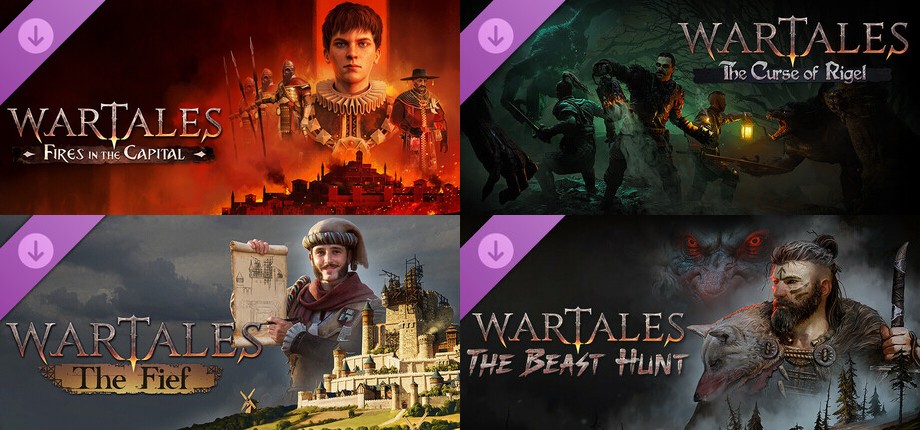 For each DLC, designed the core gameplay system as well as contents such as enemies, skills, unique battles, weapons, crafts etc.
Fires in the Capital: A chaos meter rises over time and depending on player actions. Everytime the chaos exceeds a threshold, new encounters (with their unique battle types) or worldmap events happen.
The Curse of Rigel: If I’d have a nickel everytime I worked on something with werewolves, I’d have two nickels, which isn’t a lot but it’s weird that it happened twice. In this instance, I designed the new player class Thaumaturge as well as the King’s Knights faction and Werewolves units, with mechanics to make them upgradable through grafts and injections.
The Fief: Small city builder that you can manage in between rests, highly systemic gameplay with resource management, growth balancing, lots of player-facing features unlocked as the fief grows.
The Beast Hunt: Region-wide system of “hunting the Beast” by gathering clues about it, designed an ambitious bossfight against this legendary beast in the game’s lore with very tight production restrictions. In parallel the free update coming with the DLC introduced the Huntsman job and Fierce Animals, a new type of animal unit aiming to make animals more robust and viable late-game.
Century: Age of Ashes
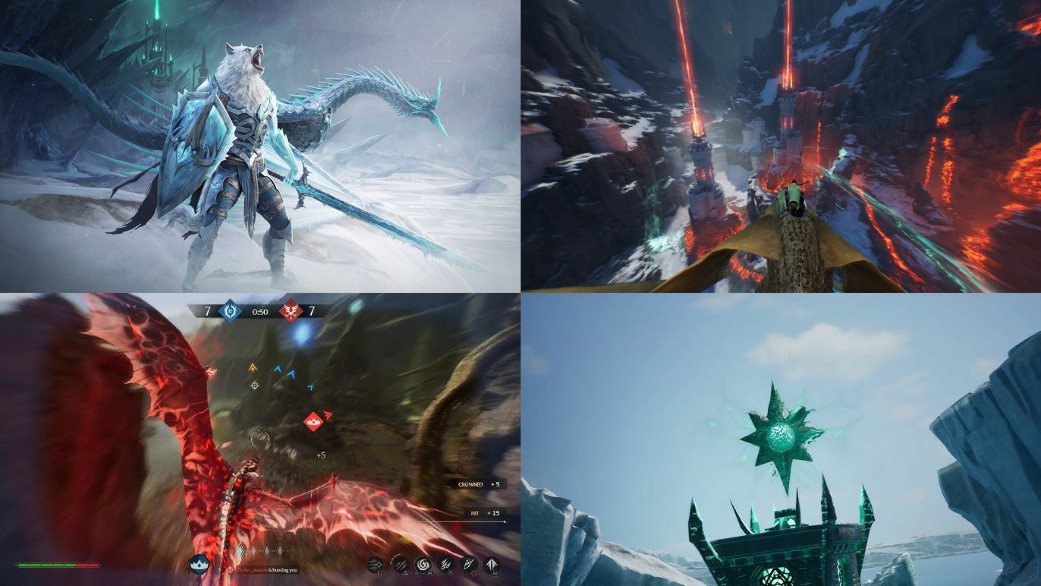 Designed and shipped live content for a free-to-play PvP multiplayer game by synthesizing shifting project requirements into a cohesive, shippable design under tight timelines.
Maintained design integrity across multiple live-content updates, ensuring a stable player experience despite high-frequency changes in development direction.
Designed and shipped live content for a free-to-play PvP multiplayer game by synthesizing shifting project requirements into a cohesive, shippable design under tight timelines.
Maintained design integrity across multiple live-content updates, ensuring a stable player experience despite high-frequency changes in development direction.
Rimeblood: Led the design and development of a new character class. By optimizing the production pipeline, I reduced the development cycle from 6 months to a record 4 months without sacrificing quality.
New Abilities (Revenue & Retention): Proposed and designed the game’s first new abilities for existing characters. Pitched, prototyped and shipped 4 unique abilities, resulting in a significant spike in player engagement and revenue.
Outbreak : Pitched the design and development of the first PVE game mode in Century, where players fight a swarm of enemies and defend two towers in successive rounds. Each round, players get to upgrade their abilities with currency they gained killing enemies the round before.
The Colosseum: Prototyped and iterated on existing gamemodes variants to bring content variety to the playerbase in a new kind of event : Kingslayer mode and Plunder mode.
Artifact : Pitched numerous concepts for the first asymetric game mode in Century inspired by search and destroy gameplay like Counter Strike. One of these concepts became the Artifact mode.
R&D : Worked on numerous design concepts for long-term direction demands with advanced UI mockups and content design. Constantly worked on core gameplay changes to make the game appeal to broader audience to fit the direction’s vision.
Duck-tective
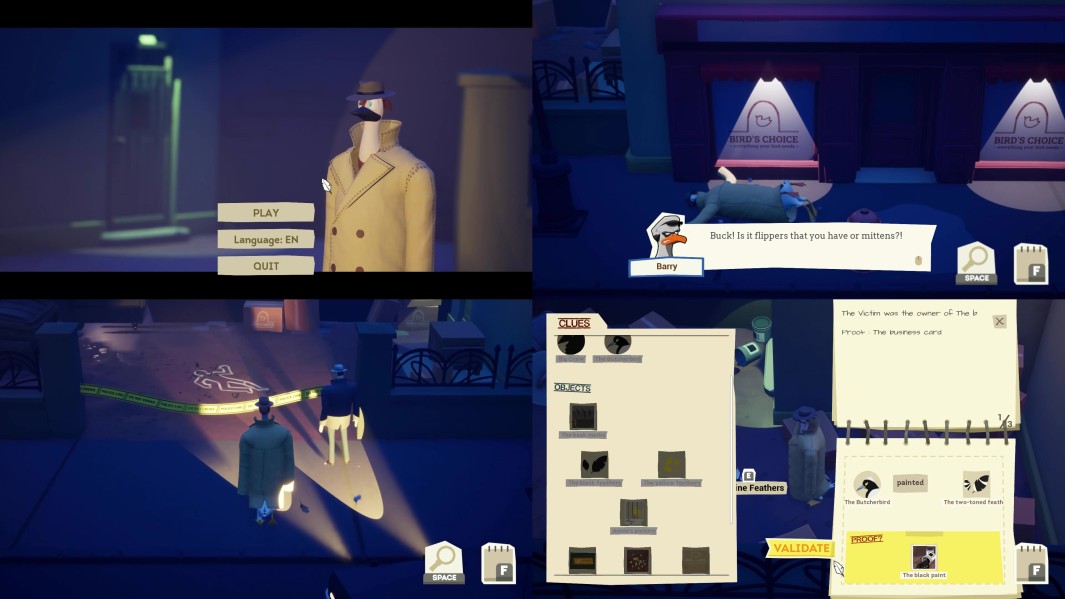
Investigation/stealth game where you play as three ducks under a trenchcoat. I pitched the design and it was greenlit to be one of the 6 student projects that year. Worked for 2 months on a vertical slice and pitch deck with a team of 8, that we presented in front of a jury of industry professionals at the end.
- Designed an investigation system where the player has to connect clues.
- Heavy work on narrative, storytelling and worldbuilding, wrote the characters, the entire story for the game, the dialogues
- I had most fun when writing dialogues for all the combination of clues that were wrong. I did a huge spreadsheet of all the combination in the current level and when I found an interesting combination, wrote a specific dialogue between the protagonists so the world truly reacts to the player’s inputs. Made it so “failing” felt rewarding by giving you bits of exclusive dialogues.
- Voiced the ducks
Divunity
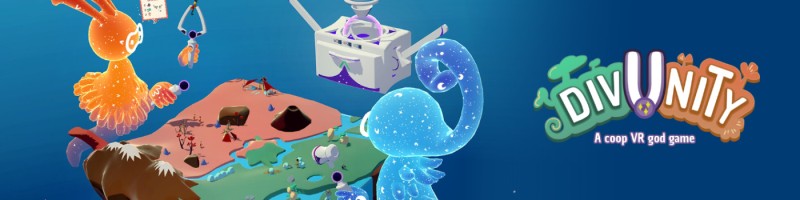 Pitched the game and got it greenlit to be one of the 12 student projects this year, developed a demo in 3/4 months. People were attracted to the ambitious vision yet very grounded and clear path towards shipping something.
- Co-developed the entire gameplay with a programmer on Unity for HTC Vive devices.
- Designed the people’s request system, wrote the requests directly in code with a predicate to determine the request’s probability of appearing based on the game state so the evolution of demands fit what the players had achieved.
- Early on they’ll ask for military stuff because they don’t like each other. Later in the game they’ll ask you to destroy them.
- To incentivize communication and cooperation early on, your people will ask to destroy the other player’s military buildings or ask them not to build any new housing for a bit, so both players have to communicate and make trade offs.
- Later in the game when the peace has settled, the people will start requesting housing of the other players people in your area, which only the other player can craft.
Games that inspired me
Wario Ware DIY
This is where it all started. I can’t remember if I’d truly considered becoming a game creator before playing this game (although I remember very young crude attempts at making board games based on Crash Bandicoot).
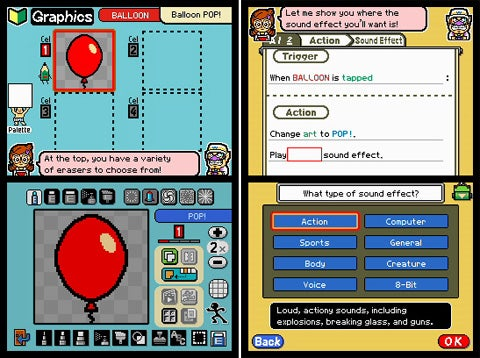
My dad brought me to the supermarket to buy me an NDS game for my birthday, I was interested in Wario Ware and had the choice between Wario Ware: DIY and Wario Ware: Touched!, I couldn’t decide. Getting impatient, my dad looked for arguments so I finally pick one. Applying the practical logic of a consumer looking for the best value-per-kilo of tomato sauce, he pointed to the back of the box: « This one has more stuff in it, it lets you make your own games too ».
He probably doesn’t even remember it, he wouldn’t recognize the game box if I showed him today. But I was sold, this made perfect sense I thought.
If I can make my own games, then there are infinite games!
I went home with a new game and an unforeseen new career path. It was very probably on a Wednesday.
Clair Obscur: Expedition 33
I have to admit that I’m not a big fan traditional turn-based RPGs (which most people would call JRPGs). Hence why I didn’t expect that game to leave such a mark on me. Mechanics that, when someone pitched them to me felt “gimmicky” were in fact extremely well-made, integrated and enjoyable ; namely shooting/aiming, QTEs and timing parries. Every single gameplay area’s environment design is absolutely stunning, the worldbuilding is incredible as well as the story.
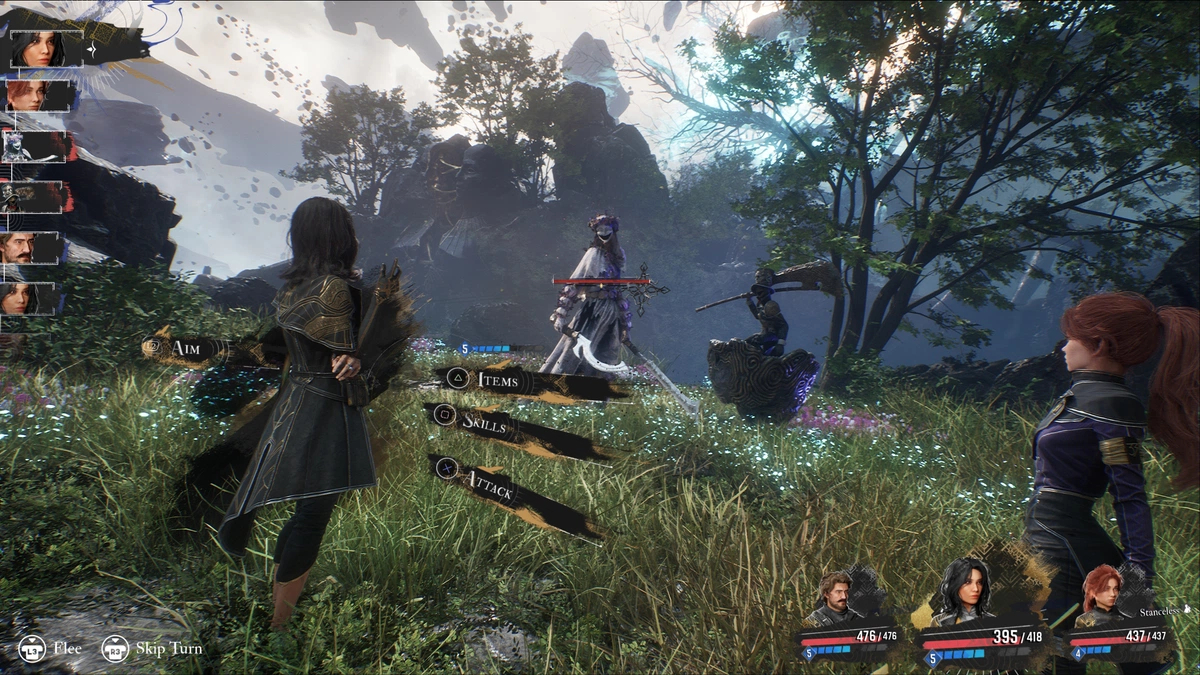 Although conceptually the game’s base mechanics don’t reinvent the wheel, it reminded me that great execution of well-known concepts is hard to make, crucial, and can yield to a masterpiece. The very way of executing those concepts is a designer’s DNA and make the experience in itself unique. It reminded me that kinda linear gameplay/storyline don’t necessarily make a boring game when the experience is expertly crafted.
Realizing this project began in Montpellier in 20191 - the same year I was studying game development in that very city - put my own journey into a perspective I still can’t quite put into words. It’s a reminder that masterpieces are built by people exactly like me, and that this is the kind of experience I’ve been wanting to make since joining this industry in 2019.
Minecraft
I’ve been playing this on and off since 2010. As a kid, I couldn’t imagine a game with so many possibilities even existing, what do you mean you can make everything you want?
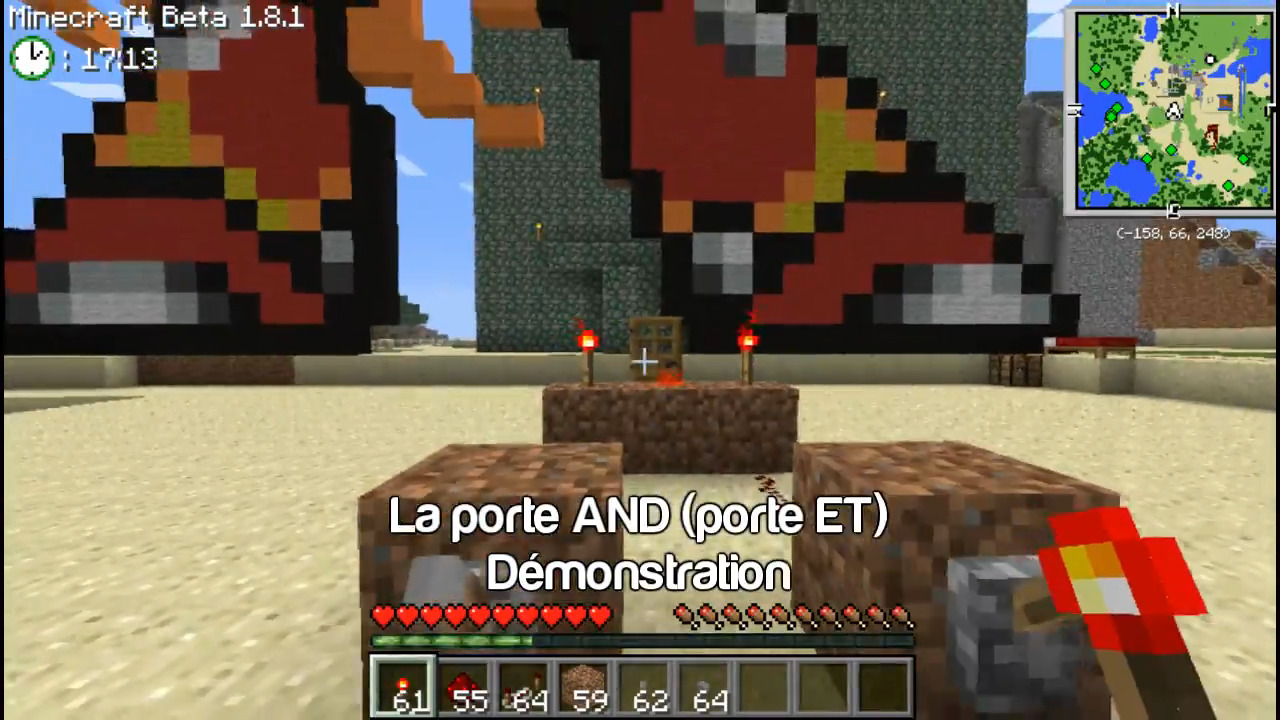
This game taught me logic gates with redstone, I ended up bringing a USB stick with the game on it to middle-school (6ème) and showing it to my Tech Ed teacher. He gave me truth tables that I filled with ease and he was impressed.
The Cosmic Wheel Sisterhood
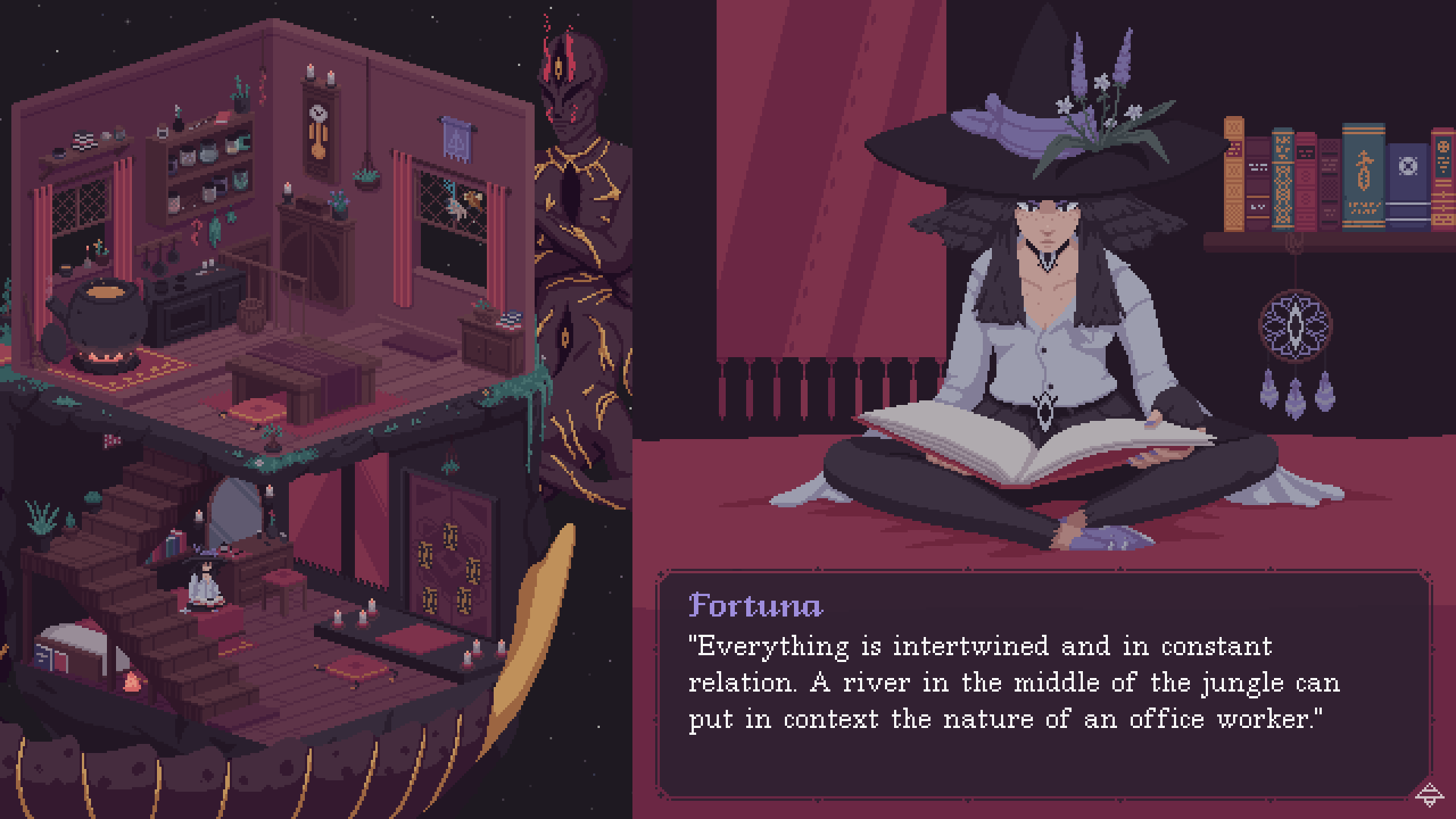
How to create engaging story and gameplay when your character stays in one room? A perfect example of worldbuilding beyond what’s shown on the screen yet that feels extremely present. Player agency is the main moving force, the story is deeply touching without feeling artificial.
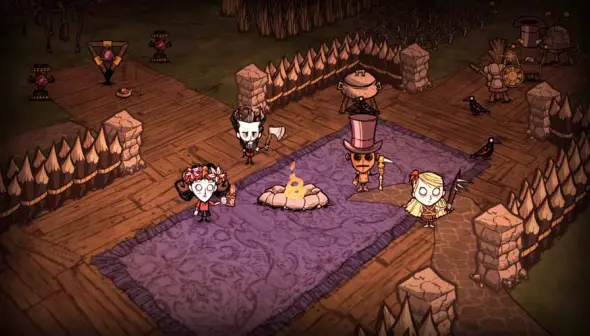
Don’t Starve
A game with a unique identity and ambience beyond its recognizable artstyle. A very sandbox-y experience with heavily distilled environmental storytelling. Content is so rich to this day I feel I have only experienced a third of it.
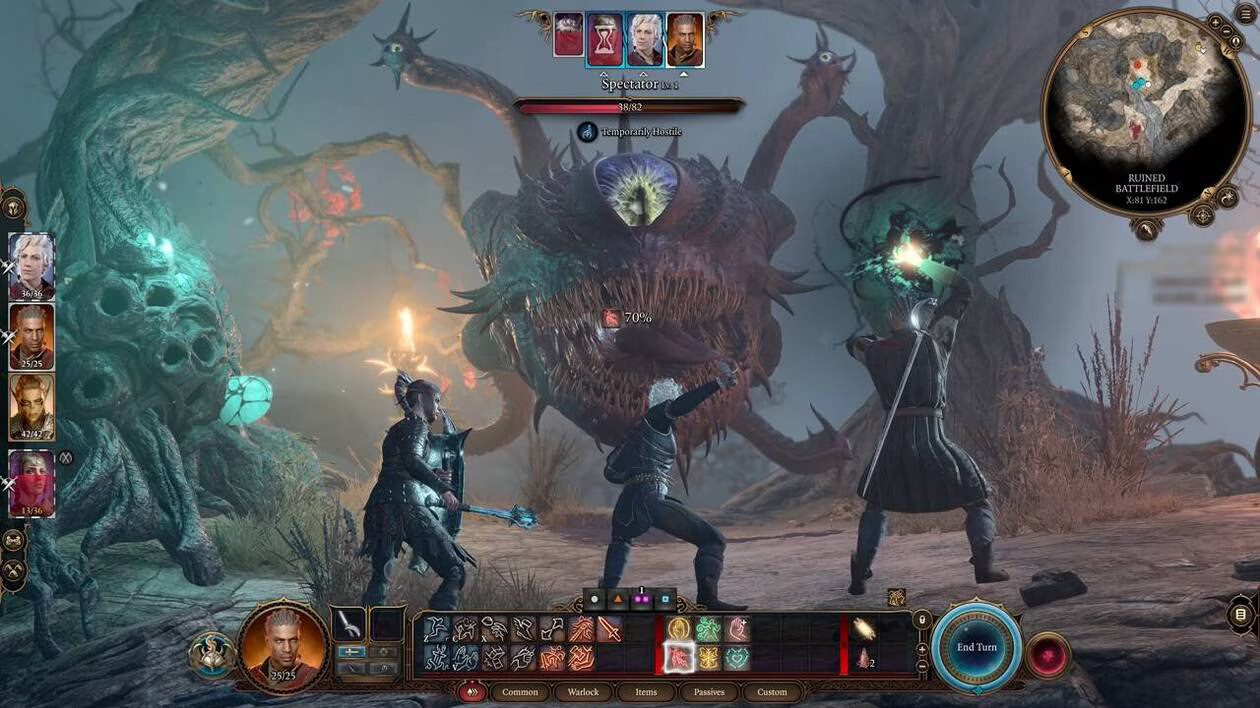
Baldur’s Gate 3
When I played this game, I could feel it was made by people who cared deeply for it. The attention to detail especially, is something I strive to achieve one day.
One of the pillars of the game is that “you can do whatever you want”, but like for real. Want to kill a main NPC? You can. The game then accounts for it later: introduces a new NPC to take its place, changes slightly a cutscene. This means, the world reacts to a lot of player actions, which is one of the core things that make a game world feel alive, and a lot of games miss. It also means, despite the game’s storyline having a few select endings, each player’s walkthrough feels truly unique through sheer number of combination.
Although the game experience is understandably limited by the story bounds (you can’t stray off to Waterdeep and become a hot dog seller), everything in that “scenario bubble” is lively, extremely intricate and refined, and offers utter freedom.
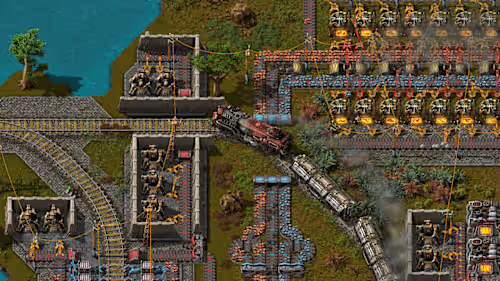
Factorio
Epitome of systemic gameplay and one of the most famous automation games. What I particularly love is that the automation is at the center of the player experience, neither the graphics, animations, controls or UI get in your way, the game makes the player interaction with the factories as seamless and direct as possible.
The retro early 3D PC games - kinda fallout-ish - artstyle is very much enjoyable to me too.
Footnotes
-
Actually the early development started in Paris in 2019, then the team moved to Montpellier. ↩